“The smartest bankers don’t compete with AI — they collaborate.”
Artificial Intelligence (AI) is transforming industries at lightning speed, and banking is no exception. From chatbots answering queries to algorithms detecting fraud, AI has woven itself into nearly every corner of financial services. Understandably, this has sparked both excitement and anxiety. Will banking jobs amidst AI vanish, or will they evolve into something stronger?
The truth lies somewhere in the middle. While AI automates routine, repetitive tasks, it also opens the door to more complex, human-centric roles. Banking professionals who adapt, upskill, and embrace collaboration with AI will not just survive—they’ll thrive.
Introduction: The Rise of AI in Banking
Banking has always been at the forefront of technological innovation. From ATMs in the 1960s to mobile banking apps in the 2000s, technology has consistently reshaped customer expectations and professional roles. AI represents the next leap.
Today, AI supports services like:
- Fraud detection through advanced anomaly tracking
- Credit scoring using predictive analytics
- Customer service with 24/7 chatbots
- Investment advice via robo-advisors
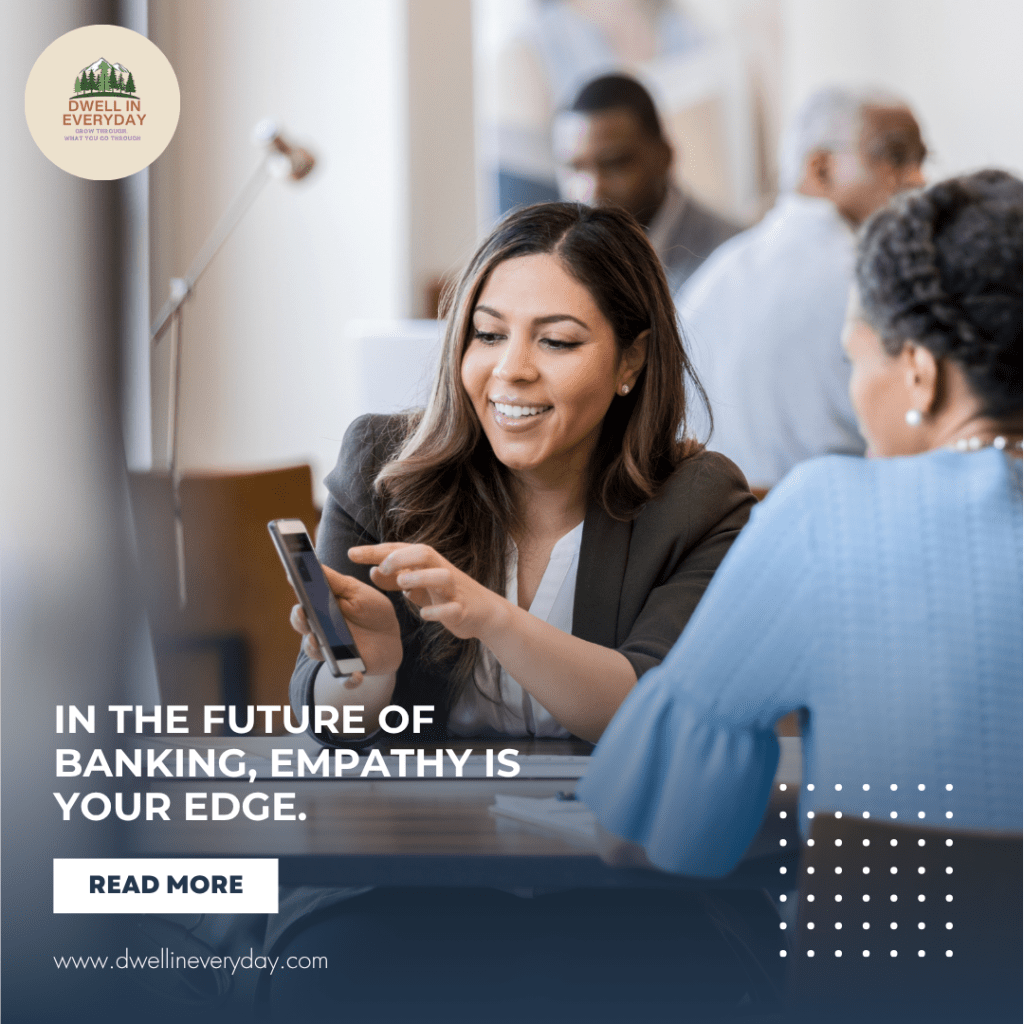
But while AI excels at efficiency, it struggles with empathy, ethical nuance, and trust-building—all critical in finance.
Understanding the AI Revolution in Financial Services
The Scope of AI in Banking Operations
AI isn’t limited to just automating processes. It’s creating entirely new workflows. From loan processing to wealth management, AI speeds up operations and reduces human error.
How AI Is Already Transforming Traditional Banking Roles
Clerical jobs such as data entry, routine compliance checks, and transaction monitoring are increasingly AI-driven. Yet, demand for bankers who can interpret these outputs and provide strategic advice is climbing.
Why Banking Jobs Are Not Disappearing but Evolving
Debunking the “AI Will Replace Bankers” Myth
Contrary to popular belief, AI doesn’t eliminate jobs wholesale—it transforms them. A World Economic Forum report predicts AI will create more jobs than it displaces, especially in finance where human judgment remains critical.
Human-Centric Skills That AI Cannot Replicate
- Empathy in customer conversations
- Trust-building with clients
- Complex negotiations
- Ethical decision-making
These uniquely human skills ensure that bankers remain indispensable.
Key Strategies for Banking Professionals to Stay Relevant
1. Moving from Transactional to Relational Work
Instead of focusing on tasks that AI can automate, banking professionals should lean into roles requiring emotional intelligence and personal connection.
Relationship Management and Client Trust
AI can crunch numbers, but only humans can truly listen, empathize, and build long-term trust.
Financial Advising and Wealth Management
Advisors can use AI-generated insights to craft personalized strategies tailored to client goals.
SME and Corporate Onboarding
Supporting entrepreneurs and businesses requires nuanced understanding, cultural awareness, and flexibility—qualities AI lacks.
2. Becoming AI-Literate Without Being a Coder
Professionals don’t need to become data scientists, but they do need to understand AI’s applications and limitations.
Understanding AI Tools in Banking
From Robotic Process Automation (RPA) to machine learning dashboards, bankers must learn to interpret outputs and question anomalies.
Ethical and Regulatory Awareness of AI
Knowing how AI works also means recognizing its blind spots—biases in data, compliance challenges, and ethical dilemmas.
3. Data Interpretation and Strategic Insight
AI provides data. Humans provide meaning.
Risk Assessment and Compliance Analysis
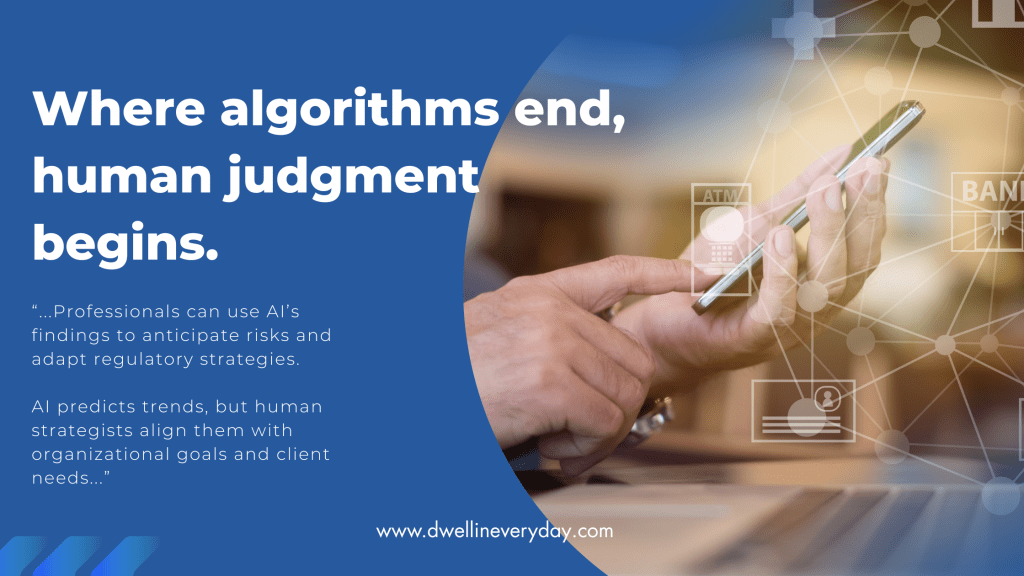
Professionals can use AI’s findings to anticipate risks and adapt regulatory strategies.
Portfolio Strategy and Decision-Making
AI predicts trends, but human strategists align them with organizational goals and client needs.
4. Collaborating with AI Instead of Competing
Bankers who embrace AI as a tool multiply their efficiency.
AI in Fraud Detection and Transaction Monitoring
AI scans thousands of transactions, but a human must decide whether an anomaly is truly suspicious.
Predictive Banking and Personalized Products
AI forecasts customer behavior, but bankers design the human-centered solutions that follow.
5. Continuous Learning as the New Currency
Adaptability is the most valuable career asset today.
Upskilling in FinTech and Cybersecurity
With banking increasingly digital, professionals must understand cybersecurity risks and fintech innovations.
Behavioral Finance and ESG Investing
Understanding human behavior and sustainable finance trends will set professionals apart in an AI-driven market.
6. Roles That AI Won’t Replace Easily
Leadership and Negotiation
AI can inform decisions, but it can’t inspire teams or close high-stakes deals.
Client Advocacy and Crisis Management
Only humans can stand by clients during difficult financial situations with empathy and tact.
Cross-Cultural and Emotional Intelligence
Global banking requires cultural sensitivity that AI can’t replicate.
FAQs on Banking Jobs Amidst AI
Q1. Will AI completely replace banking jobs?
No. AI will automate repetitive tasks, but human skills like empathy, trust, and decision-making remain irreplaceable.
Q2. What skills should bankers develop to stay relevant in the AI era?
Focus on relationship management, AI literacy, data interpretation, and continuous learning in fintech and ESG.
Q3. Do bankers need coding knowledge to survive AI disruption?
Not necessarily. A strong understanding of AI tools and their limitations is enough for most professionals.
Q4. Which banking roles are most at risk from AI?
Clerical jobs like data entry and routine transaction monitoring are most likely to be automated.
Q5. Which banking roles will AI not replace?
Leadership, negotiation, client advocacy, crisis management, and financial advising remain human-first.
Q6. How can bankers use AI to their advantage?
By collaborating with AI for data analysis, fraud detection, and predictive insights, while focusing on strategic decision-making.
Conclusion: Embracing AI as a Partner, Not a Threat
Banking jobs amidst AI are not disappearing—they’re evolving. Professionals who adapt, upskill, and embrace collaboration with technology will find themselves more valuable than ever. The future of banking is not about competing with machines but leading with human qualities AI cannot replicate: empathy, creativity, and ethical judgment.
👉 For further reading, explore the World Economic Forum’s insights on AI and the future of jobs (source).
 Dwell in Everyday